PCOS Dinner Ideas: 10 Easy Indian Meals, Veg and Non-Veg
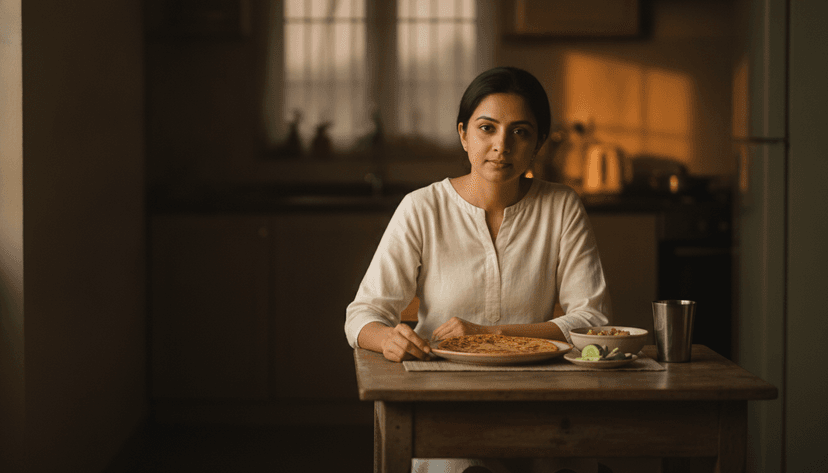
Dinner is where the whole day's effort slips, isn't it? You eat a proper breakfast, you carry a decent lunch, and then it is 9:30 at night, you are starving and tired, and what's waiting on the stove is a big plate of rajma chawal. So you search for PCOS dinner ideas that an Indian kitchen can actually manage, and most of what you find is quinoa bowls and avocado toast.
Yes, one dinner on its own will not change your PCOS, which doctors now call PMOS since the 2026 rename. But dinner does more than people give it credit for. What you eat at night, how much of it, and how late you sit down to eat all shape your blood sugar and insulin through the hours you sleep.
Why dinner matters more with PCOS
Most women with PCOS have some insulin resistance. Your body has to push out more insulin to handle the same roti and dal, and that extra insulin nudges the ovaries to make more androgens (male-type hormones), which is where the acne, facial hair and late periods come from. Our piece on PCOS and insulin resistance goes into this properly.
Timing has been tested directly. In one trial, researchers took 60 lean women with PCOS and gave every one of them the same total calories for 90 days. Half ate a big breakfast and a small dinner; the other half did the opposite. In the big-breakfast group, free testosterone decreased by 50%, and more of those women ovulated. The dinner-heavy group saw no change at all.
A second study gave 20 healthy young adults the same dinner, once at 6 pm and once at 10 pm. After the late dinner their blood sugar stayed higher through the night, and so did their cortisol (the stress hormone). They did not have PCOS, so treat this as a hint rather than proof for you. Still, it points the same way.
The Ayurvedic view of a light evening meal
Ayurveda talks about your agni (digestive fire). It is strongest around midday, when the sun is high, and it slows down after sunset. So the evening meal is meant to be laghu (light): easy to digest, not oily, not huge. A heavy dinner eaten late tends to sit in the stomach half-digested and leave behind ama (sticky, undigested residue), which Ayurveda links to sluggish metabolism and a Kapha imbalance, the heavy, slow pattern many women with PCOS will recognise.
Put the two side by side and they agree. Make lunch your main meal, and keep dinner earlier and lighter.
How to fill a PCOS-friendly dinner plate
You don't have to cook separately for yourself. Take whatever the family is eating and arrange your thali like this:
- Half the plate sabzi, cooked or as a salad.
- A proper helping of protein, like dal, paneer, tofu, eggs, fish or chicken.
- A small share of grain, one or two rotis or a small katori of rice.
- Just enough ghee or mustard oil to cook with.
Protein is the part most Indian dinners go short on. In a 6-month trial of 57 women with PCOS, a diet that swapped some carbohydrates for protein led to more weight loss and better glucose than a standard diet, even without counting calories. You don't need to go high-protein. Just make sure every dinner has one real source of it, and you will feel full longer and avoid the late-night biscuit hunt.
Low-GI (glycemic index) foods help too, because they release sugar into your blood slowly. In a trial of 96 women with PCOS, the low-GI group had better insulin sensitivity, and among women who finished the study, 95% compared with 63% saw their cycles become more regular. Whole dals, millets like jowar and bajra, and most sabzis are low-GI already.
10 easy Indian dinner ideas for PCOS
Vegetarian dinners
- Moong dal chilla stuffed with grated paneer and onion, with pudina chutney.
- Lauki chana dal with one jowar or bajra roti and some kheera on the side.
- Palak paneer with one multigrain roti. Skip the cream on top.
- Moong dal khichdi loaded with carrot, beans and peas, finished with a teaspoon of ghee.
- Besan chilla with tomato, onion and dhaniya, plus a small bowl of sauteed vegetables.
- Paneer or tofu tikka made on a tawa, with a big bowl of mixed vegetable soup.
Non-vegetarian dinners
- Egg bhurji with plenty of capsicum, onion and tomato, and one roti.
- Tawa fish or a light fish curry with a big helping of sabzi and a small katori of rice.
- Chicken stew or shorba thick with vegetables, and one roti.
- Egg curry with patta gobhi and matar sabzi.
Rice is fine at dinner in a small amount, with dal and vegetables alongside. If you have been told to drop it, read our honest take on rice and PCOS before you give up chawal. And for a whole week mapped out, breakfast to dinner, there is the 7-day Indian PCOS diet plan.
Small habits that make a light dinner stick
The food is half of it. The other half is when and how you eat it.
- Aim to finish dinner by 7:30 or 8 pm, and at least two to three hours before you sleep. Late shift at work? Then just keep the gap before bed.
- Have a small snack around 5 pm, a handful of roasted chana or a fruit, so you don't reach dinner ravenous.
- Leave dahi (curd) out of dinner. Ayurveda calls it guru (heavy to digest) and keeps it for daytime, so have chaas (buttermilk) with lunch instead.
- Walk for ten minutes after you eat, even if it is just up and down the corridor.
- If you crave something sweet afterwards, try a cup of warm jeera water first.
When to see a doctor
Changing your dinner helps, but it does not replace proper care. See a doctor if:
- Your periods have stopped for three months or more, or the bleeding is very heavy.
- You are putting on weight fast without eating any differently.
- You feel very thirsty, pass urine often, or notice dark velvety patches on your neck or underarms.
- You have been trying to conceive for a year without success.
If you take metformin or any other medicine, talk to your doctor before you make big changes to your meals, because your dose may need a look. And if you are pregnant, breastfeeding or on any medication, check with your doctor before trying any herb or herbal drink.
Where to start this week
You don't need to overhaul your kitchen. Pick one change, maybe moving dinner half an hour earlier, or putting a katori of dal or some paneer on your plate every night, and keep it going for two weeks before adding the next. The earlier dinner is usually the hardest one to hold on to, with family meals running late, so if the whole house can't shift, eat your portion a little before everyone else and sit with them for the rest.
Get a plan built for you
An article can explain what usually happens and why. It can't read your reports. To know whether your symptoms come from PCOS, your thyroid, your weight, stress or something else, a doctor has to look at your whole history.
A Qura consultation is a video call with a BAMS Ayurvedic doctor. She goes through your reports with you and builds a 90-day plan that covers your diet, Ayurvedic medicine and regular follow-ups. We won't tell you PCOS will simply go away, because no honest doctor can promise that. What we can do is find what is actually driving your symptoms and work on that.
See how the 3-month PMOS (PCOS) program works, or book your consultation.
This article is for general information and can't replace advice from your own doctor. Please don't start or stop any medicine, herb or supplement without talking to a qualified doctor first, especially if you are pregnant, breastfeeding or already on medication.
Frequently asked questions
What time should I eat dinner if I have PCOS?
Try to finish by 7:30 or 8 pm, and at least two to three hours before bed. In one trial, women with PCOS who ate a big breakfast and a small dinner had better insulin and lower free testosterone than women who ate most of their food at night.
Can I eat roti at night with PCOS?
Yes. One or two rotis with dal or sabzi suit most women. Jowar or bajra rotis are a good swap, and eating them with a protein keeps your blood sugar steadier.
Is khichdi a good dinner for PCOS?
Moong dal khichdi with plenty of vegetables is light and easy to digest, which is exactly what Ayurveda asks of an evening meal. Keep the rice part moderate and add a salad or sabzi on the side.
What should I avoid at dinner with PCOS?
Go easy on fried food, mithai and big portions of rice or maida late at night. Ayurveda also suggests keeping curd for the daytime, because it is heavy to digest after dark.
References
- Jakubowicz D, Barnea M, Wainstein J, Froy O. Effects of caloric intake timing on insulin resistance and hyperandrogenism in lean women with polycystic ovary syndrome. Clin Sci (Lond). 2013;125(9):423-32.
- Gu C, Brereton N, Schweitzer A, et al. Metabolic Effects of Late Dinner in Healthy Volunteers-A Randomized Crossover Clinical Trial. J Clin Endocrinol Metab. 2020;105(8):2789-802.
- Sorensen LB, Soe M, Halkier KH, Stigsby B, Astrup A. Effects of increased dietary protein-to-carbohydrate ratios in women with polycystic ovary syndrome. Am J Clin Nutr. 2012;95(1):39-48.
- Marsh KA, Steinbeck KS, Atkinson FS, Petocz P, Brand-Miller JC. Effect of a low glycemic index compared with a conventional healthy diet on polycystic ovary syndrome. Am J Clin Nutr. 2010;92(1):83-92.
Ready to Start Your Journey?
Discover how personalized Ayurvedic guidance can support your path to hormonal balance and wellness.
Consultation cost - Free
Start Your 90-Day TransformationStill have a question? Message our care team on WhatsApp and we'll help.
Chat with usRelated Articles
Rice and PCOS: Can You Still Eat Chawal? An Honest Indian Answer
Told to give up rice after your PCOS diagnosis? You probably don't have to. Here is how portion, pairing, cooled rice and lunchtime eating change what rice does to your blood sugar.
5 Ayurvedic Home Remedies for PCOS That Actually Help
Methi water, dalchini, spearmint tea, haldi: some kitchen remedies genuinely help your PCOS and some are just marketing. How to use the good ones safely, and what the evidence really says.
Ghee for PCOS: Good or Bad? What Desi Ghee Really Does to Your Body
Were you told to stop ghee the day you heard the word PCOS? You may not have to. Here is what research and Ayurveda say about desi ghee, how much makes sense, and who should be careful with it.